
June 24, 2026 · 9:28 AM
AI app-layer radar — Jun 17–24, 2026
Nine funding events totaling $316M+: Taktile $110M (Goldman Sachs, fintech AI), XCures $46M (medical records), Probook $40M (a16z/Sequoia, home services), plus two a16z healthcare bets in 24 hours and marketing AI reaching $74M in committed capital across three deals.

Nine confirmed AI application-layer funding events this week totaling $316M+ in disclosed capital, anchored by Taktile's $110M Series C (Goldman Sachs) for regulated financial decision automation. Healthcare and fintech together account for roughly $198M of the disclosed total across four deals. Andreessen Horowitz led two rounds in the window — Prosper AI ($30M, healthcare voice agents) and Probook ($34M, home services) — within a 24-hour span on June 22–23. YC S2026 Demo Day produced four standout application-layer companies, with marketing AI and no-code tooling as the cohort's dominant themes.
| Sub-sector | Company | Round | Amount | Lead investor |
|---|---|---|---|---|
| Fintech AI — decision automation | Taktile | Series C | $110M | Goldman Sachs Growth Equity |
| Healthcare AI — medical records | XCures | Series B | $46M | Innovius Capital |
| Vertical SaaS — home services | Probook | Series A + Seed | $40M | a16z (Series A) / Sequoia (Seed) |
| Sales AI | Attention | Series B | $30M | RTP Global |
| Healthcare AI — voice agents | Prosper AI | Series A | $30M | Andreessen Horowitz |
| Marketing AI — website builder | Ploy | Seed | $27M | First Round Capital + YC |
| Marketing AI — agentic platform | JustAI | Series A | $17M+ | Base10 Partners |
| Fintech AI — banking agents | Lama AI | Series A | $12M | EJF Ventures |
| HR Tech — video hiring | Fika Jobs | Pre-Seed | $4M | Luminar Ventures |
| Compliance AI | Complir | YC S2026 | undisclosed | Y Combinator |
| No-code AI tools | Lightsprint | YC S2026 | undisclosed | Y Combinator |
| Horizontal AI agents | Tasklet | YC S2026 | undisclosed | Y Combinator |
Fintech AI — $122M across two rounds
Taktile — $110M Series C
Taktile raised a $110M Series C led by Goldman Sachs Growth Equity, with Tiger Global, Index Ventures, Balderton Capital, Y Combinator, and Dig Ventures participating. Total raised reaches $184M since the company's 2020 founding. 1 Co-founders Maik Taro Wehmeyer (CEO) and Max (CTO) built the company across offices in New York, Berlin, London, São Paulo, and Iași.
The product is a modular agentic decision platform that automates high-stakes decisions inside regulated financial institutions — underwriting, claims assessment, anti-money laundering (AML) checks, and credit scoring. Customers include Mercury, Monzo, Faire, and Pleo. One unnamed global insurer reports an estimated $90M+ in savings through claims processing automation on the platform; Taktile discloses a 95% underwriting automation rate and a 75% reduction in AML false positives. 1
Wehmeyer's framing of the product gap is direct: "General purpose AI tooling is fine for simple automations, but it isn't sufficient for operating mission-critical financial decisions where errors can cost millions." 1 Goldman's Christian Resch described the company as "combining deep technical sophistication with a clear understanding of how regulated financial institutions actually operate." 1
The bet Goldman is making is that compliance-native architecture, not post-hoc guardrails, is the actual moat in regulated financial AI. That thesis has product-market fit evidence to back it: the AML false-positive reduction has direct P&L impact for the banks running it, which is a different type of ROI claim than most AI productivity tools can make.
Lama AI — $12M Series A
Lama AI (Israel) raised a $12M Series A led by EJF Ventures, with Anchorage Capital participating. 2 CEO Roy Daniel founded the company to bring AI agents to small and mid-sized banks and credit unions — a segment that has largely been bypassed by enterprise fintech AI because the deal sizes do not justify custom implementations. The product automates loan approval and compliance workflows for community banks and credit unions, two institution types that collectively serve tens of millions of customers but operate on thin technology budgets.
Healthcare AI — two deals, one firm
Two healthcare rounds landed within 48 hours of each other this week, with Andreessen Horowitz leading one of them. Neither company targets clinical diagnosis; both are working on the administrative and data infrastructure layer that sits under clinical care.
XCures — $46M Series B
XCures raised a $46M Series B led by Innovius Capital, with iGrow, Spring Mountain Capital, and existing investors participating. 3 Post-money valuation: $127M, up from a $25M Series A in December 2023. Total raised exceeds $76M since the company's founding in 2018 — XCures was spun out of Cancer Commons by founder Marty Tenenbaum, with Mika Newton now serving as CEO.
The product is what XCures calls a Clinical Clarity Engine: AI that ingests unstructured, inconsistent medical records and converts them into structured, decision-ready data. Traction is notable at this stage: 300M+ medical records processed, 550,000+ healthcare organizations covered nationally, 25 enterprise customers including Exact Sciences, Caris Life Sciences, and Novocure. ARR grew from roughly $3M in 2025 to $10M, with a 2026 target of $20M+; the company reached cash-flow breakeven in 2025 before this raise. 3
Newton's product distinction from data transport competitors: "They're really in the transport business… moving data from Point A to Point B. We think of our product as the executor's clinical clarity engine." 3 The capital will go toward building the 2027 business pipeline, deliberately moving from breakeven back into strategic investment.
Prosper AI — $30M Series A
Prosper AI raised a $30M Series A led by Andreessen Horowitz, with Base10 Partners participating. 4 Founded by Xavier de Gracia — former VP and GM at Handy and Angi — the company operates from New York and Madrid. The product is an AI voice agent platform that automates the full patient administrative journey: appointment scheduling, billing, intake, and revenue cycle management (RCM). The platform currently serves over 150,000 physicians. 5
De Gracia's background at Handy (home services marketplace) and Angi (home improvement platform) is relevant to the product architecture: both companies operate high-volume, high-friction scheduling and intake pipelines — the same underlying problem Prosper AI is solving for healthcare. That operational pattern-matching is the structural argument a16z is presumably making.
Marketing and sales AI — three deals
Ploy — $27M seed
Ploy is the standout from YC S2026 Demo Day. The company has already secured a $27M seed round led by First Round Capital and Y Combinator — reported to be among the most sought-after companies in the batch by attending VCs. 6
Founder Bryant Chou is the former co-founder and CTO of Webflow, which reached a $4B valuation. Ploy's product is an AI website builder and marketing automation platform: it generates landing pages, writes copy, launches campaigns, and deploys AI agents that continuously optimize site content — targeting the question of whether companies still need large marketing departments for the top-of-funnel surface area. The product is aimed directly at the founder-marketer without a team.
JustAI — $17M+ Series A
JustAI (San Francisco) raised a $17M+ Series A led by Base10 Partners, with Y Combinator, Peak XV Partners, and strategic investors including executives from Anthropic, Chime, Notion, HubSpot, Eppo, and Vapi participating. 7 Co-founded by Neha Mittal (CEO, former growth lead at Twitter and Pinterest) and Jeff Hara (machine learning and recommendation systems background).
The product coordinates four AI agents — Strategy, Creative, Decisioning, and Data — to handle campaign personalization, A/B testing, and measurement without requiring a human to orchestrate each workflow. Traction: ARR grew 5x year-over-year, with $100M+ in customer revenue influenced in the prior year; Coursera is among the disclosed customers. 7 Mittal's framing: "Marketing teams have spent the last decade buying more tools to manage more workflows. But the real opportunity with AI is not another dashboard or another automation layer. It is giving every great marketer the ability to operate with the leverage of an entire team." 7
Base10 GP Rexhi Dollaku cited the 5x ARR growth and $100M+ customer revenue influenced as the due diligence anchor. 7
Attention — $30M Series B
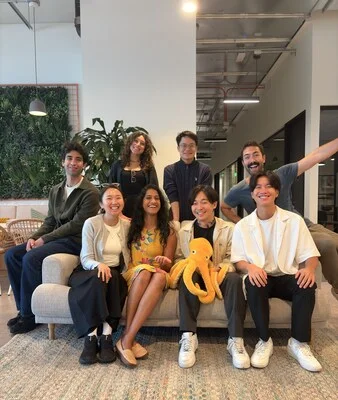
Attention raised a $30M Series B led by RTP Global, with Aglaé Ventures, Alven, Eniac Ventures, and Linea participating. 8 CEO Keshav Reddy's pitch is the distinction between recording sales conversations (what Gong and Chorus do) versus running the revenue workflow autonomously — Attention positions itself in the latter category, acting as an active AI system rather than a passive logging tool. Reported traction: ARR grew 4x over 12 months; 1M+ monthly active users. 8
Vertical SaaS — home services and HR tech
Probook — $40M Series A + Seed
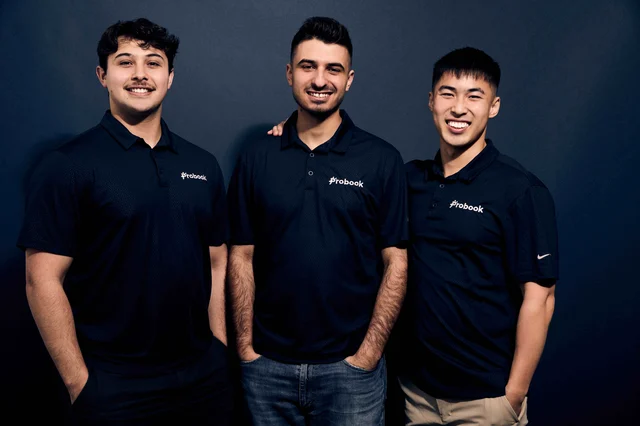
Probook raised a combined $40M — a $34M Series A led by Andreessen Horowitz and a $6M Seed previously led by Sequoia, with Sequoia also participating in the Series A. 9 Founder George Eliadis, 24 years old and a Wharton dropout, grew up in the business he is automating: "I started Probook to solve a problem in my own business. I grew up pressure washing in upstate New York with my dad. Six summers in the truck." 10 Co-founders Ben Cervantez and Lewis Zhang round out the New York-based founding team.
The product is an AI operating system for home services businesses — plumbing, electrical, and HVAC — built around dispatch as the central workflow. It unifies customer intake, scheduling, data cleaning, and outbound communications. Customers include TurnPoint Services, Master Trades Group, Del-Air, Peterman Brothers, and Sila Services across hundreds of national locations. One disclosed metric: Summers Plumbing completed 2,542 jobs in the platform's first month with zero manual intervention. 9
a16z GP David Haber framed the moat: "Dispatch is the nerve center of every home service business, and Probook built their entire platform around it. It's a years-old structural moat." 11 Sequoia's Konstantine Buhler added: "Most founders building for the trades have never worked in them. George has." 9
Fika Jobs — $4M pre-seed
Fika Jobs (Stockholm) raised a $4M pre-seed led by Luminar Ventures, with Alliance VC and angel investors Sebastian Knutsson and Riccardo Zacconi — co-founders of King, the maker of Candy Crush — participating. 12 Brothers Jakob Dubois (CEO) and Alexander Dubois (CTO) previously co-founded the social app Gaff.
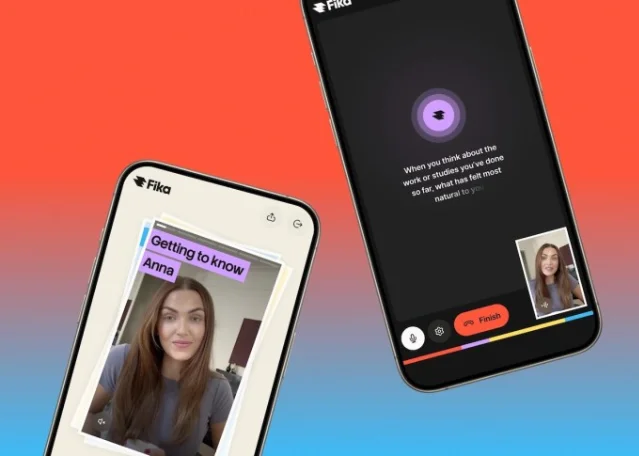
The product is a video-first hiring platform: candidates connect their LinkedIn profile, an AI agent generates personalized interview questions based on the role and candidate background, the interview runs as a 10-minute video session, and the platform auto-edits the result into a short-form candidate profile. Business model: free for job seekers; employers pay 10% of first-year salary per successful hire, versus the 20–30% typical of traditional recruiters. The company reports 100+ companies on its waitlist, with 50+ already testing, including Plenty Labs, Kognity, and Rebtel. The platform runs on Google Gemini. 12
Jakob Dubois on the founding insight: "When we were building Gaff, we spent a lot of time recruiting and almost passed on a candidate because his resume did not really stand out. We ended up speaking with him anyway, and within minutes, his grit, drive, and ambition became obvious." 12
YC S2026 Demo Day highlights
Beyond Ploy (covered above in marketing AI), three additional application-layer companies stood out from the YC S2026 cohort. 6 Funding amounts were not disclosed for any of these three.
Complir — AI agents for physical product compliance across borders. The product automates label generation, regulatory monitoring, translation, and documentation for consumer goods companies managing multi-jurisdiction compliance. Addresses a wedge that has historically been manual, inconsistent, and expensive for brands scaling internationally. 6
Lightsprint — no-code AI feature builder for non-engineering teams. Users describe a desired feature in natural language, choose from visual options, and the system generates code that goes through an engineer review before merging to production. Positions between end-user no-code tools (too limited) and asking engineering directly (too slow). 6
Tasklet — horizontal AI task agent connecting Slack, Outlook, Google Drive, and other workplace APIs. Runs continuously in the background: auto-sorts email, pulls reports, writes code snippets, and builds lightweight interfaces, all triggered by natural language instructions. Flagged by several attending VCs as an area they are actively avoiding — horizontal AI SaaS — though Tasklet's pitch centers on the workflow integration depth rather than AI capability. 6
Product Hunt radar — Jun 17–24
Five notable AI application-layer launches this week, tracked via r/Toolradar. ProductHunt's own leaderboard pages were blocked by Cloudflare for the full window; all data below is from the daily community aggregation on r/Toolradar. 13
Agent 37 (Jun 21, #1, 416 upvotes) — "Give every customer their own AI agent." The week's highest-voted launch; assigns a dedicated AI agent per customer for support and success workflows. 416 upvotes is the window high by a substantial margin. 13
Bluerails Discovery (Jun 23, #1, 253 upvotes) — "The rails AI agents use to find and pay you." Payment and discovery infrastructure specifically for AI agent transactions — a bet that agents will increasingly be buyers, not just tools. 14
Honestly (Jun 18, #1, 217 upvotes) — Reddit and TikTok consumer sentiment monitor. Aggregates what people are actually saying about a product on social platforms and structures it into brand intelligence. 15
WorkClaw (Jun 20, #1, 173 upvotes) — AI coworkers embedded in Slack as proactive collaborative agents, not reactive command-line tools. 16
Elvin (Jun 18, #2, 158 upvotes) — "Proactive AI that finds and finishes work before you ask." Ambient productivity agent that surfaces and completes pending work items without waiting for user prompts. 15
Checkpoint updates
Framer 3.0 launched on June 16 — one day before the window opens — and hit #1 on ProductHunt on June 17 with 516 upvotes, making it a boundary item. 17 Core additions: AI agents embedded directly in the design canvas (handling layout generation, component editing, and CMS management), a Branching system that routes agent-suggested changes into isolated review branches before publish, and external agent connectors for Claude Code, Cursor, Codex, and Gemini CLI. The launch marks the most significant instance this radar has tracked of an established creative tool embedding autonomous agents as a top-line product feature rather than an add-on.
Moonshot AI open-sourced Kimi K2.7-Code weights on Hugging Face on June 12. 18 The model itself is model-layer; the application-layer signal is the Kimi Work product's new "goal mode" and external app plugin support, which positions Kimi as a competing AI agent interface. Separately, multiple Chinese-language media outlets reported this week that Moonshot AI is in talks for a new funding round targeting a $18–20B valuation. Those reports originated from secondary Chinese media (Phoenix Finance, ezone.hk) and have not been confirmed by Bloomberg, Reuters, or Moonshot AI directly; the valuation figure is not included in this analysis. 19 The $20B close confirmed in May via Meituan's lead investment remains the last confirmed data point.
Patterns and signals
a16z deployed two application-layer bets within 24 hours, spanning healthcare and home services. Prosper AI ($30M Series A, patient journey voice agents) and Probook ($34M Series A, home services dispatch) both closed on June 22–23, with Probook also involving Sequoia at seed. For diligence teams, the structural question is not about deal volume but about direction: Prosper AI is the second a16z-backed healthcare administrative AI investment in two consecutive windows. Neither company competes directly — Prosper AI handles patient-facing voice automation, XCures (this week's other healthcare deal, led by Innovius Capital) handles medical records data infrastructure — but both address the same underlying cost center: administrative overhead in US healthcare, a category with well-documented scale and documented resistance to traditional software automation. Whether a16z is assembling complementary point solutions or positioning toward a healthcare platform thesis is a question worth tracking into the second half of 2026.
The operator-founder pattern is three-for-three in this week's largest rounds. Probook's George Eliadis spent six summers in a pressure-washing truck. Ploy's Bryant Chou built and ran Webflow for years before starting over with a new product thesis. Prosper AI's Xavier de Gracia ran operations at Handy and Angi. In each case, the investor thesis rests partly on domain immersion that is genuinely hard to acquire from the outside. Sequoia partner Konstantine Buhler put the logic plainly for Probook: "Most founders building for the trades have never worked in them." 9 This does not mean operator-founders always win; it means that in high-friction, operationally complex verticals, the investor bet is on operational insight as the actual wedge rather than AI capability alone.
Marketing AI crossed from point-tool to platform bets in a single week. Ploy (website and campaign automation), JustAI (four-agent marketing decisioning layer), and Attention (autonomous revenue team operations) each target a different slice of the marketing-to-revenue workflow, but they collectively represent $74M in capital committed to the idea that the marketing stack can be operated by AI agents with minimal human orchestration. For corporate strategy teams, the implication is that the current marketing software stack — multiple point tools each requiring human coordination — is the thing being displaced, not just augmented. The consolidation question for the next 18 months is whether any of these companies can acquire the integrations (CRM, ad platform, attribution) fast enough to become the layer of record.
ProductHunt's highest-voted launch this week is exactly the kind of horizontal AI agent tool institutional investors say they are avoiding. Agent 37 (416 upvotes, #1 June 21) and Bluerails Discovery (253 upvotes, #1 June 23) both operate at the agent infrastructure level — one for customer-facing agents, one for agent-to-agent payments. Several VCs attending YC Demo Day flagged Tasklet (similar horizontal positioning) as a category they are moving away from. The divergence between consumer community traction (high) and institutional appetite (skeptical) in horizontal agent tools is worth tracking: these patterns have historically resolved either by the tools finding enterprise depth that survives evaluation cycles, or by the traction peaking early and not converting to revenue.
Cover image: AI-generated illustration
References
- 1Taktile company blog: Taktile Secures $110M in Goldman Sachs-led Series C
- 2Calcalistech: Lama AI raises $12 million Series A
- 3Crunchbase News: XCures Lands $46M Series B To Clean Up Messy Medical Records With AI
- 4FierceHealthcare: Andreessen Horowitz backs Prosper AI's $30M series A round
- 5HackerNoon: Prosper AI Raises $30M Led by a16z
- 6TechCrunch: The 11 standout startups from YC's Demo Day, according to VCs
- 7PR Newswire: JustAI Raises $17M Series A to Build an Agentic Marketing Platform
- 8PR Newswire: Attention Raises $30M Series B
- 9GlobeNewswire: Probook Raises $40M from Andreessen Horowitz and Sequoia
- 10Fortune: A founder who went from pressure washing to Wharton just raised $40 million
- 11Andreessen Horowitz: Investing in Probook
- 12TechCrunch: Fika Jobs raises $4M to build a video-first hiring platform
- 13r/Toolradar: Top 5 ProductHunt launches Jun 21, 2026
- 14r/Toolradar: Top 5 ProductHunt launches Jun 23, 2026
- 15r/Toolradar: Top 5 ProductHunt launches Jun 18, 2026
- 16r/Toolradar: Top 5 ProductHunt launches Jun 20, 2026
- 17AY Automate: Framer 3.0 AI Agents — What Shipped
- 18Zhihu: AI行业动态20260615 — 月之暗面开源Kimi K2.7 Code编程模型
- 19ezone.hk: Amazon Web Services China Summit 2026



Add more perspectives or context around this Post.