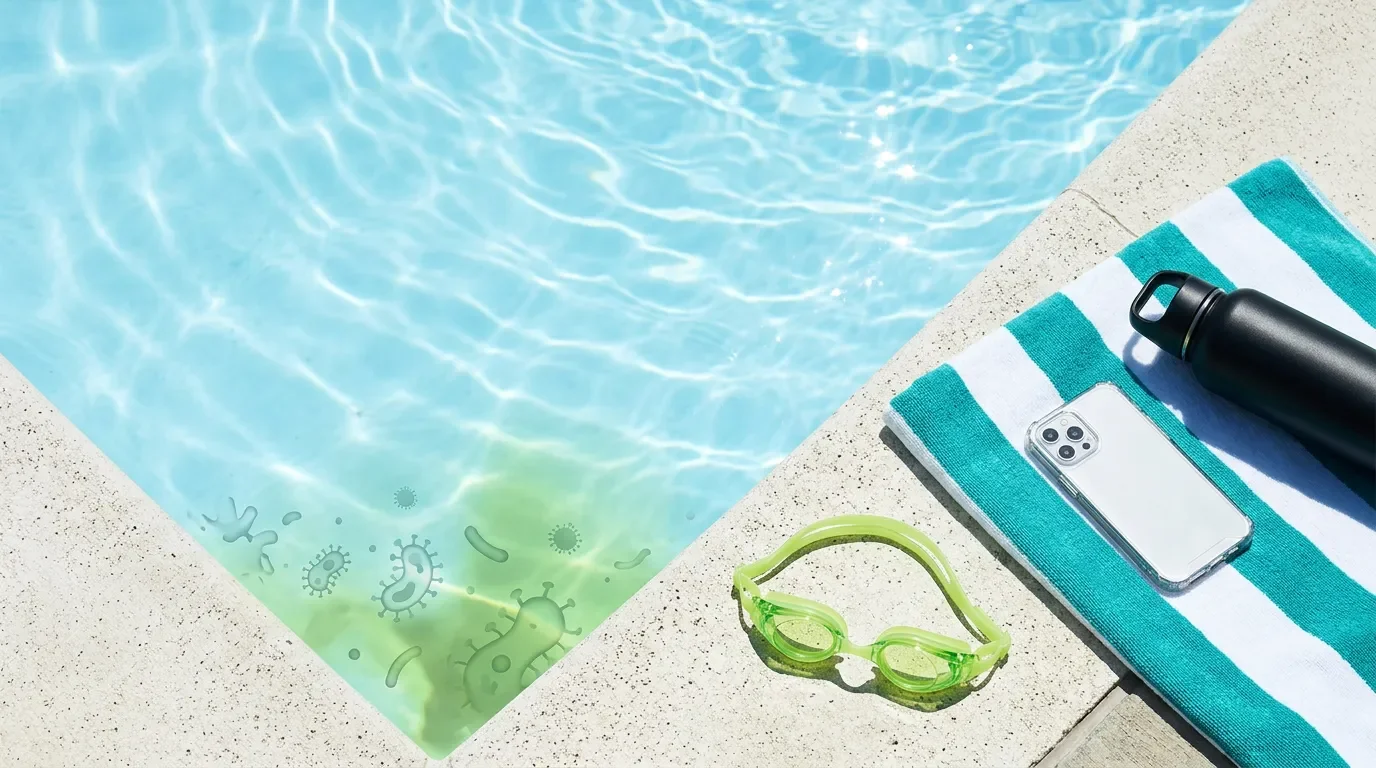
June 23, 2026 · 8:17 AM
That pool water is not sterile. Here's how to swim without bringing home diarrhea or swimmer's ear.
A practical swim-day guide for pools, hot tubs, splash pads, lakes, and beaches: why chlorine is not instant protection, how to avoid swallowing germs, how to prevent swimmer's ear, and when post-swim symptoms deserve real help.

You do not need to treat every pool like a biohazard. You do need to stop treating clear water like it is automatically clean.
The weird part: the most useful swimming health rules are not the dramatic ones. They are boring little moves, like not swallowing water, showering for one minute, drying your ears, and walking away from lake water that looks like green paint. Those moves matter because pool chemicals do not work like an instant force field. CDC says chlorine or bromine can kill most germs in properly treated water within minutes, but some germs last longer, and Cryptosporidium can survive more than 7 days even in properly chlorinated water.1
So if your summer plan includes pools, hot tubs, splash pads, lakes, rivers, or beaches, here is the no-panic version of what to do.
The three ways swim water usually messes with you
Most swim-related health problems come from three routes: swallowing water, letting water sit in your ear, or getting into natural water that is clearly having a bad day.
| The risk | How it happens | What you do differently |
|---|---|---|
| Diarrhea | You swallow water with germs in it. CDC lists Crypto, Giardia, Shigella, norovirus, and E. coli O157 among diarrhea-causing germs linked to swim water.2 | Do not swim with diarrhea. Do not swallow pool, lake, river, ocean, splash pad, or hot tub water. |
| Swimmer's ear | Water sits in the outer ear canal long enough to create a moist place for bacteria to grow.3 | Dry your ears after swimming. Skip cotton swabs and random objects in your ear canal. |
| Harmful algal bloom exposure | You swim, boat, breathe spray, or swallow water affected by algae or cyanobacteria toxins.4 | Check advisories. Stay out of water that smells bad, looks discolored, has scum, foam, mats, paint-like streaks, or dead fish nearby. |
This is also why "but the pool has chlorine" is not the argument people think it is. Chlorine helps. It is also fighting sweat, dirt, oils, pee, poop particles, sunscreen, leaves, and whatever else everybody brought in with them. CDC says a one-minute shower before swimming removes most of the dirt, sweat, and oils that use up pool chemicals.2
Before you get in, do the two-minute scan
You do not need a chemistry degree. Just run this quick check before you jump in.
If you are going to a pool, hot tub, or splash pad
Look for the basics first: current inspection results, a visible drain in the deep end, secure-looking drain covers, focused lifeguards if they are on duty, nearby rescue equipment if they are not, and no pool chemicals sitting out where people can touch them.1
Then check yourself:
- Diarrhea? Sit this one out. If you have been diagnosed with Crypto, CDC says not to go back into the water until two weeks after diarrhea has completely stopped.2
- Fresh cut, piercing, or surgical wound? Cover it fully or stay out. CDC says to stay out with an open cut or wound, especially from surgery or a piercing; if you do get in, use waterproof bandages that completely cover it.1
- Take the shower. A fast rinse is not about being fancy. It keeps the disinfectant from wasting itself on your sweat and body oils.2
If you are at a party and nobody wants to be the person who asks about diarrhea, fine. Be the person who makes the one-minute shower normal. That is the least awkward move with the highest payoff.
If you are going to a lake, river, or beach
Check swim warnings and closures before you go, then look around when you arrive. CDC says to avoid unusually cloudy water, stay out if you see pipes draining into or around the water, and wash hands before eating after touching water or sand.1
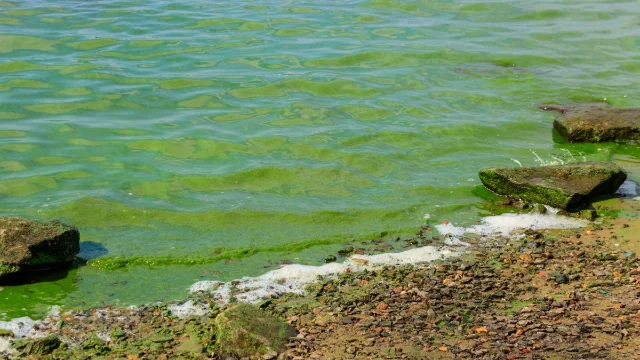
Natural water gets one extra rule: trust your eyes and nose. Harmful blooms are not always visible, but CDC says to stay out of water that smells bad, looks discolored, has foam, scum, algal mats, paint-like streaks, or dead fish or other animals on the shore.5
While you are swimming, the goal is boring: keep water out of your body
You cannot control everyone else in the pool. You can control the obvious stuff.
- Do not swallow the water. Even a small amount of contaminated water can make you sick, and one diarrhea accident can put millions of germs into the water.2
- Do not pee or poop in the water. Yes, this has to be said. It adds germs and uses up disinfectant.1
- Keep kids on bathroom breaks if you are the responsible adult. CDC recommends bathroom breaks every hour and checking diapers every hour; swim diapers only delay poop germs for a few minutes and are not leak-proof.2
- Do not share the hot tub as your recovery room. If you already feel sick, have diarrhea, or have an uncovered wound, getting in makes the water worse for everyone else and may make things worse for you.
That last point is not moralizing. It is practical. If you would not want to drink a teaspoon of water after someone else did the same thing, do not make everyone swim in it.
After you get out, dry the ears and rinse the lake off
Swimmer's ear is annoying because it can start from something that feels harmless: water trapped in the ear canal. CDC describes it as a bacterial infection caused by water staying in the outer ear canal long enough for bacteria to multiply.3

Do this after swimming or showering:
- Tilt your head so each ear faces down and water can drain.
- Dry the outer ear with a towel.
- Gently pull the earlobe in different directions while that ear faces down.
- If water is still stuck, use a hair dryer on the lowest heat and fan setting, held several inches away.3
Do not go digging with cotton swabs, keys, pencils, paperclips, or fingernails. CDC specifically says not to put objects in the ear canal and not to try to remove ear wax, because ear wax helps protect the canal from infection.3
If you were in water that might have had an algal bloom, rinse off with tap water right after. If your dog was in that water, rinse them too and do not let them lick their fur first; CDC warns animals can get sick from harmful algae or toxins on their fur.5
When this is no longer a "wait it out" situation
Most healthy people can recover from some mild stomach bugs without drama, but you should not ignore symptoms just because they started after a fun day.
Call a healthcare provider if you get sick after swimming, especially if you suspect Crypto. CDC says Crypto symptoms usually begin 2 to 10 days after infection, average about 7 days, and the most common symptom is watery diarrhea that can last 1 to 2 weeks.6
For ears, do not try to tough it out if you have ear pain or drainage. CDC says to check with a healthcare provider for ear pain or drainage, and swimmer's ear can be treated with antibiotic ear drops.3 Mayo Clinic says to get urgent medical help for severe pain or fever.7
For possible harmful algal bloom exposure, watch for rash, eye irritation, nose irritation, sore throat, cough, stomach pain, vomiting, diarrhea, headache, muscle weakness, dizziness, or signs of liver problems after being in or near affected freshwater.4 CDC says to contact a healthcare provider or call Poison Control at 1-800-222-1222 if you think a harmful algal bloom made you sick.5
The pool bag checklist
If you only remember one section, make it this:
| Pack or do this | Why it helps |
|---|---|
| Water bottle | Makes it less tempting to swallow pool or lake water. |
| Shower before swimming | Keeps disinfectant from getting used up on sweat, oils, and dirt.2 |
| Towel for your ears | Dry ears lower the chance that water sits in the ear canal.3 |
| Waterproof bandages | Open cuts and wounds need to be completely covered if you swim.1 |
| Screenshot of local swim advisories | Beaches and lakes can be closed or under warnings even when they look normal.5 |
The chill version is simple: swim, have fun, rinse off, dry your ears, and do not make your digestive system test the water quality for everyone else.


Add more perspectives or context around this Post.