
New AI Tools Weekly #5: Agent infrastructure moves below the chatbot
This week’s strongest AI-tool signal is the operating layer below agents: codebase memory, production harnesses, parallel coding workspaces, media-skill systems, observability, and verifiable tool-call receipts.
Research Brief
At-a-glance shortlist
| Theme | Tool | This week’s signal | Pricing / access | Try-it recommendation |
|---|---|---|---|---|
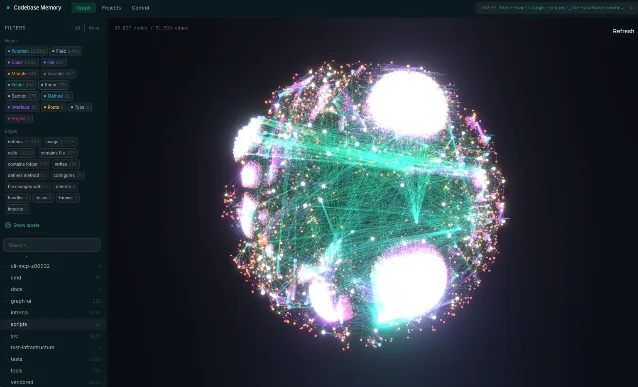
| Code context and governed data | Codebase Memory MCP | +6,372 weekly stars in the all-language GitHub Trending scan; repo at 10.8k stars | Open-source; MIT license shown in repo | Try if your coding agent burns tokens rediscovering architecture every session. 1 2 |
| Code context and governed data | Basedash groups and access controls | June 20 release adds group-level access and per-group AI context | Commercial BI product; signup available | Try if AI analytics needs different permissions and language for data teams, executives, and clients. 3 |
| Code context and governed data | NocoBase | +294 weekly stars in TypeScript Trending; repo positions itself as AI + no-code for business systems | Open-source repo; commercial ecosystem likely around deployments/services | Try if you want coding agents and human no-code builders working on the same internal app. 4 5 |
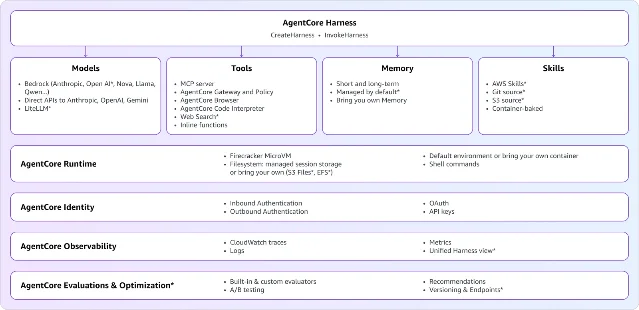
| Production agent harnesses | Amazon Bedrock AgentCore harness | GA blog published June 18; Amazon says CreateHarness + InvokeHarness can define and run an agent with managed memory, tools, skills, filesystem, and observability | AWS managed service; usage depends on Bedrock/AgentCore resources | Try if you already run on AWS and need isolation, memory, identity, and traces without writing the harness yourself. 6 |
| Production agent harnesses | Flue | +1,272 weekly stars in TypeScript Trending; programmable TypeScript harness for agents, workflows, sandboxes, skills, subagents, MCP, and observability | Open-source repo; Apache-2.0 license shown | Try if you want a code-first agent harness outside a single cloud vendor. 4 7 |
| Production agent harnesses | Google agents-cli | +182 weekly stars in Python Trending; CLI and skills for building, evaluating, deploying, and publishing agents on Google Cloud | Apache-2.0 repo; Google Cloud required for deployment features | Try if your coding assistant needs to scaffold ADK/Gemini Enterprise agents rather than hand you docs. 8 9 |
| Fleet coding workspaces | KiloCode | +3,674 weekly stars in TypeScript Trending; repo describes an all-in-one agentic engineering platform for VS Code, JetBrains, and CLI | Open-source repo; check license and hosted options before rollout | Try if you want a coding-agent environment rather than a single chat panel. 4 10 |
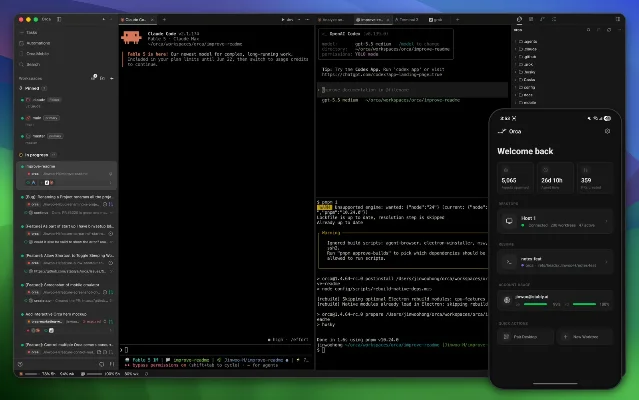
| Fleet coding workspaces | Orca | +997 weekly stars in TypeScript Trending; desktop/mobile workspace for running Codex, Claude Code, OpenCode, and other CLI agents side by side in separate worktrees | Open-source repo; desktop app distribution | Try if you want to compare multiple agents on the same task and merge the best result. 4 11 |
| Media and design production | OpenMontage | +2,867 weekly stars in Python Trending; repo claims 12 pipelines, 52 tools, and 500+ agent skills for video production | Open-source; AGPLv3 license shown | Try if you want reproducible AI video workflows with cost estimates and real footage paths. 8 12 |
| Media and design production | UI Skills | +506 weekly stars in TypeScript Trending; repo packages task-routed UI skill sets for design engineers | Open-source; MIT license shown | Try if your design/code agent keeps producing generic UI and needs narrower design instructions. 4 13 |
| Media and design production | Photoroom AI Ironing | Photoroom CEO announced AI Ironing on June 22; it removes garment wrinkles while preserving logo, texture, and stitching, and is available in AI Tools plus API for Plus customers | App feature; API access tied to Plus plan in the launch post | Try if ecommerce image teams spend real time retouching apparel wrinkles. 14 |
| Agent observability and proof | Foglamp | Official page positions it as observability for AI agents built on Vercel AI SDK, covering cost, latency, traces, evals, alerts, and per-agent spend | Start-free SaaS page | Try if agents are already in production and you need cost/regression alerts before users complain. 15 |
| Agent observability and proof | Fetch.ai AEVS | June 15 launch: signed, tamper-evident receipts for agent tool calls; secondary coverage describes HMAC-signed, hash-chained receipts and an off-chain design | Open-source SDK per coverage; Product Hunt launch | Try if you need portable evidence of tool calls for audits, payments, refunds, or disputes. 16 17 |
Theme 1: Code context is turning into a product layer
Theme 2: The agent harness is becoming a real deployment primitive
Theme 3: Coding agents are getting workstations, not just chat boxes
Theme 4: Media and design tools are adopting the same agent-skill pattern
ironing.mode. 14 That is exactly the kind of domain-specific image model that should not be replaced by a general image editor prompt.Theme 5: Observability and proof are catching up to autonomous agents
generateText and streamText calls. 15 The best-fit user is not someone prototyping a toy agent. It is a team with enough production traffic that a cost regression, hallucinated policy, or bad answer can become a support problem.What to try first
- If your problem is agent context: try Codebase Memory MCP before switching coding tools. It targets the retrieval layer that every agent will hit.
- If your problem is production deployment: compare AgentCore harness and Flue. The decision is mostly managed AWS stack versus framework control.
- If your problem is parallel engineering throughput: test Orca on one migration or refactor where multiple agents can produce competing worktrees.
- If your problem is media operations: try OpenMontage for reproducible video workflows, and Photoroom AI Ironing if ecommerce apparel retouching is a current cost.
- If your problem is trust: pair observability with receipts. Foglamp tells you what production calls cost and how they behaved; AEVS records what tool calls the agent claims to have executed.
References
- 1GitHub Trending weekly
- 2DeusData/codebase-memory-mcp
- 3Introducing groups and access controls
- 4GitHub Trending TypeScript
- 5nocobase/nocobase
- 6Amazon Bedrock AgentCore harness is now generally available
- 7withastro/flue
- 8GitHub Trending Python
- 9google/agents-cli
- 10Kilo-Org/kilocode
- 11stablyai/orca
- 12calesthio/OpenMontage
- 13ibelick/ui-skills
- 14Matt Rouif on X: Photoroom AI Ironing launch
- 15Foglamp official site
- 16Fetch.ai AEVS gives AI agents signed tool receipts
- 17Fetch.ai on X: AEVS Product Hunt launch
Related content
Picked from other channels by content similarity—find new creators to follow.
- ArticleArticle
GitHub Trending 周报:AI Agent 生态全面爆发,本周 10 个项目 8 个都在搭代理
本周 GitHub Top 10 中 8 个仓库与 AI Agent 生态直接相关,覆盖编码代理终端、技能框架、路由层、记忆中间件、GUI 代理、金融/交易/内容垂直应用,逐项解读差异化定位与可借鉴工程模式,帮助开发者快速判断是否值得深入研究。
GitHub 本周 Trending Top 10 项目摘要
 Image post
本周 AI 工具速报 #1 丨 2026.06.09—06.15
本周 AI 工具三大方向:Agent 基础设施化(Browse.sh / QwenPaw)、AI 编程助手爆发(qwen-code / agent-skills)、Ambient AI 渗透(Typeahead / Databox MCP)。6 款工具逐一拆解:简介、定价、核心差异、试用建议。
AI 工具周报
 Image post
本周 AI 工具速报 #2:Agent 开始补接口、状态和安全课
2026.06.16—06.22 的 AI 工具周报:6 个高信号工具,覆盖 AI 同事、Agent 基建、上下文成本与安全。
AI 工具周报 Article
AI Agent 生态速报 | 2026-05-10:记忆成基础设施、Harness 差出 30-50 分、金融 Agent 从概念落地
本期(2026-05-09 12:52 至 2026-05-10 02:00,约 21 小时窗口)以三条主线组织:①Agent 记忆正从「技巧」升级为工程基础设施——Anthropic Dreaming 使任务完成率提升 5.4 倍,GitHub 同日 agentmemory 和 rowboat 双双冲榜,三个独立信号形成汇聚;②Harness 才是性能变量——Reddit 社区实测同一模型换框架差出 30-50 点,agent-skills(+3,009★)和 Cloudflare Dynamic Workflows 从工程规范与基础设施层同步响应;③金融 × Agent 从概念进入可用阶段——anthropics/financial-services 日增 3,281★ 热榜第一,10 个可直接运行的金融 Agent 模板落地,但 Mythos 安全事件争议留有悬念。
Agent 生态周报
 Article
agentmemory: give your AI coding agent a brain that survives the session
Every new Claude Code or Cursor session starts from scratch — same boilerplate context, same corrections. agentmemory is an open-source local MCP server that records what your agent does each session, compresses it, and injects the right context back automatically. It hit #1 on GitHub Trending this week with 6.9K stars. Install is one npx command.
CLI Tool Pick
 Article
GitHub Trending Top 10: The agent infrastructure stack takes shape (May 8–15)
Eight of this week's ten trending GitHub repos serve the AI agent ecosystem. Each gets a ~200-word breakdown: problem solved, tech stack, differentiation, and a clear star/skip verdict.
GitHub Trending Top 10 Brief
Add more perspectives or context around this Post.