
The distribution wall: #BuildInPublic Jun 15–22
June 22, 2026 · 8:26 AM

The distribution wall: #BuildInPublic Jun 15–22

A post-by-post breakdown of 19 standout #buildinpublic posts from Jun 15–22, 2026, across X (8 posts) and Indie Hackers (7 posts featured, 4 in supporting cluster). The week's core pattern: the distribution wall — the gap between having a working product and getting strangers to pay for it — showed up as the substance of the highest-engagement posts on both platforms. @helloalzea's portfolio video reel led X with 422 likes and 260 bookmarks after pivoting away from a collapsing #NoAI format. degensing ran a 11-post launch blitz (~775 cumulative likes) plus a 155-like time-math breakdown of the 40-to-4-minute post. On Indie Hackers, Vishnu K's AI supervision paradox (39↑/168💬) and Solopreneur Dad's $159 first-revenue post (23↑/53💬) generated the highest engagement. Closes with a 14-row tactic digest table.

Nineteen posts stood out across X and Indie Hackers this week. The single thread running through almost all of them: the moment after you ship. Building the product is the comfortable part — founders across both platforms kept hitting the same wall at exactly the same moment, and the ones who wrote about it honestly collected the engagement. The community is clearly not tired of this conversation.
This week at a glance:
PostPlatformEngagementOne-line driver
@helloalzea — Orenji Studio portfolio videoX422 likes · 260 bookmarks · 12,264 viewsFinished work on video > WIP screenshots; bookmarks signal designer saves
@helloalzea — "Design AI can't replicate"X285 likes · 171 bookmarks · 8,061 viewsAnti-AI positioning as a moat narrative, not a complaint
@degensing — "The 4-minute post"X155 likes · 6,811 views · 6 bookmarksTime-math framing: 20 min/week vs half a workday
@degensing — AI content homogenization (2023 vs 2026)X149 likes · 4,586 viewsNative ad structured as industry observation
@degensing — VoiceMoat Product Hunt launch blitzX~775 cumulative likes (11 posts)Same message, 11 copies, 1-minute window
@annieqyang — Day 20 community connectX140 likes · 108 replies · 8,459 viewsMilestone + open invitation = reply-loop trigger
@marckohlbrugge — WIP app submitted to App StoreX74 likes · 8,197 viewsSingle product milestone from an otherwise general-interest feed
@MarkoCirix — Day 29 analytics breakdownX30 likes · 20 replies (653 followers)Per-post data with named levers; 4.6% ratio for nano-tier
Vishnu K / Agent37 — AI supervision paradoxIH39↑ · 168 💬Counter-intuitive insight: supervision beats intelligence at scale
Solopreneur Dad / PageGains — first $159IH23↑ · 53 💬Product audience = platform audience; silence vs. public contrast
Kalai / skyleap — AuDHD build-freeze loopIH22↑ · 77 💬Vulnerability + self-solving product resonated hard
Galyna Arikh — 6 solo SaaS prioritiesIH17↑ · 68 💬Structured framework from a non-technical founder 7 weeks in
DanialPG / ReqBrief — 40 days, zero paying strangersIH17↑ · 65 💬Honest SEO data that other founders can benchmark against
Khoa Nguyen / 1DevTool — rejected $15K offerIH13↑ · 28 💬Fear inventory vs. conviction inventory; actual acquisition number
PokerReflex — free web tools instead of adsIH14↑ · 59 💬Free tools rank better than app landing pages; people share useful things

X: what moved the algorithm this week

@helloalzea: two formats, both win — for different reasons

Alzea (@helloalzea, 4,658 followers, running Nakama and Orenji Studio in Indonesia) had the biggest week in the tracked cohort. Two posts on June 20 together earned 707 likes and 431 bookmarks.
The first post was a video reel of Orenji Studio's design portfolio — 422 likes, 260 bookmarks, 17 retweets, 12,264 views. That 260-bookmark count is the signal. Bookmarks on a portfolio post mean designers and potential clients are saving for reference or future hire — this is intent-driven saving, not casual engagement. 1
The second, posted 55 minutes earlier, used the frame "Day xxx making design AI can't replicate ✌️" alongside a single design photo — 285 likes, 171 bookmarks, 14 retweets, 8,061 views. 2
Context worth knowing: helloalzea's previous format, a #NoAI position series, collapsed from 386 to 84 likes between the June 8–15 window and this week. The pivot to "AI can't replicate" is meaningful — it reframes his stance as a craft narrative rather than a political one. The antagonist is the same (AI-generated design), but the posture shifts from "I oppose this" to "here's what I'm building that the antagonist can't touch." That framing is more durable and more bookmarkable.
Tactic 1: Portfolio videos pull save-for-later behavior at a different rate than individual design posts — they present finished work as a body, not a process update. If you build anything visual, a quarterly portfolio reel gives clients and collaborators a reference file. Tactic 2: "What AI can't replicate" lands better than "#NoAI" as a positioning frame because it's about your capability, not your opinion of theirs.
Loading content card…

@degensing: three formats, one content week

Degen Sing (@degensing, 18.5K followers, building VoiceMoat — an AI writing tool that trains on your own posts to generate voice-accurate drafts) published a high-volume week: an 11-post Product Hunt launch blitz, a friction-removal breakdown, and a native-ad narrative about AI content convergence.
The launch blitz (June 16): degensing posted the identical VoiceMoat launch message across 11 separate tweets in a one-minute window. 3 The primary post earned 125 likes; one copy accumulated 15,926 views against the anchor's 2,959 — a 5.4x gap from the same content at slightly different timestamps. Total cumulative likes across all 11 posts: approximately 775. No revenue or Product Hunt ranking data was shared.
The mechanic: each copy targets a slightly different segment of the follower feed. One will land in the algorithm's sweet spot; the rest function as fallbacks. degensing has also stopped using the #buildinpublic hashtag, which means this tactic is visible only to his direct follower timeline.
"The 4-minute post" (June 20) was his highest single-post engagement of the week: 155 likes, 7 retweets, 6,811 views, 6 bookmarks. 4 The post maps the standard 40-minute post-writing process into layers of friction — 5 minutes staring at blank screen, 10 minutes drafting, 8 minutes rewriting, 7 minutes second-guessing, 5 minutes on the hook — and argues that AI removes 25 of those minutes without removing the writing itself.
"AI doesn't remove the writing. It removes the friction layers." 4
The time math in the post is what made it land. Five posts per week at 4 minutes = 20 minutes total. Five posts per week at 40 minutes = 3.3 hours. degensing explicitly calls the 20-minute version "a defensible commitment for anyone running a real company." That framing converts a tool pitch into a rational production decision. 4
The content homogenization post (June 19) earned 149 likes and 4,586 views through a structure worth studying: personal narrative (managed Twitter KOLs for 5 years, posted as one for 2) → industry observation (AI-written content is converging — everyone sounds the same) → product reveal (VoiceMoat). 5 The pitch is embedded in the last three paragraphs of a post that stands on its own without them.
"Standing out stops being about hacks or volume. It quietly becomes a contest of who's the most human." 5
Tactic 3: For launches, the multi-copy blitz distributes feed presence across timestamps at the cost of looking repetitive to any individual follower who sees multiple copies. One landing in the algorithm's favor can dramatically outperform the rest. Tactic 4: When making a tool pitch, build the time-math argument first — what did this cost before, what does it cost after, what does the difference unlock. The product pitch lands after the math has already done the persuasion.
Loading content card…

@annieqyang: the reply-loop format holds for a second week

Annie Yang (@annieqyang, 640 followers, building ViralFarm — a pre-launch product) posted Day 20 of #buildinpublic on June 20, celebrating 500 connections and inviting builders in AI SaaS, e-commerce, and ML research to connect. 140 likes, 2 retweets, 108 replies, 8,459 views, 11 bookmarks — 21.9% engagement ratio on her 640-follower base. 6
This is her second consecutive week posting the same format — a milestone statement plus a segmented invitation to connect — and the second consecutive week it has significantly outperformed every other post type in her feed. Last issue's community-connect post held a similar ratio profile.
The reply count (108) is doing something the like count doesn't fully capture. Each reply is a new connection with someone in the communities she named. The algorithm reads 108 replies from 640 followers as extreme engagement density and amplifies accordingly, which explains 8,459 views on a 640-follower account.
"So excited to have connected with almost 500 people 🤯🥳" 6
What changed from Day 1: she's now positioning herself as a connector between different builder communities (AI SaaS, e-commerce, ML researchers), not just a solo builder with a product. The persona shift from "I'm building in public" to "I'm the bridge between communities" generates more replies because it makes each reply feel like a facilitated introduction rather than a reaction.
Tactic 5: At nano-scale (under 1,000 followers), replies per post matter more than likes — each reply is a relationship, not a reaction, and the algorithm treats high reply density as a strong amplification signal. State a milestone ("connected with 500 people"), then invite specific audience segments to identify themselves. Segment specificity (not "connect with me" but "especially builders in [X] and [Y]") drives higher reply rates because readers can decide whether they belong.

@elvissun + @MarkoCirix: two posts worth the setup time

Elvis Sun (@elvissun, 45.3K followers, building newsjack.sh — an agentic PR research stack) published two standout posts this week.
June 17 — an analysis of Anthropic's email signaling the shift to "always-on, long-running agents": 48 likes, 7 retweets, 11 replies, 6,680 views, 35 bookmarks. 7 The 35 bookmarks on 48 likes (0.73:1 bookmark-to-like ratio) indicates technical founders are saving this as a strategic reference — higher save density than his 2025 average.
June 16 — the "is this shit legit?" AI trust signal thread: 26 likes, 28 bookmarks, 2,371 views. 8 He ran Claude on a fresh session, attempted a curl | bash install of newsjack.sh, and watched the agent flag four consecutive trust concerns: install command risk, potential script divergence between website and repo, unknown authors, insufficient trust signals overall. Each concern became a fix he shipped.
"Trust used to be a feeling. Now it's a checklist a model walks before it lets your name through the door." 8
The bookmark-to-like ratio (28:26, essentially 1:1) is unusually high for a 26-like post and confirms it's being saved as an action checklist. The format is directly replicable: test your own product in a skeptical Claude session, read the gaps it finds as a missing trust-signal list, ship the fixes as content.
MarkoCirix (653 followers, building QueryDive — an AI search analytics tool, Bratislava) is a new addition to the tracked cohort. Day 29 of #buildinpublic posted June 20: 30 likes, 20 replies, 870 views, 2 QueryDive signups — 4.6% like rate. 9 For a 653-follower account, that engagement density is strong.
What distinguishes MarkoCirix's format is that he treats each post type as a named, repeatable lever. After 29 days of data, the milestone post has won every time he's run it (Day 9, 22, 27, 29). His conclusion:
"It's not a finding anymore, it's a lever I can pull on purpose." 9
He also notes that real-experience questions vastly outperform hypothetical ones (541 impressions vs. 123 for comparable posts), and that his Day 30 one-month retrospective brought a single signup — giving him 16 total over 30 days (one every 1.9 days). 10
Tactic 6: Run your own product in a skeptical AI session (Claude works; ask it explicitly whether your brand is legit). The gaps it identifies are a free trust-signal audit — each one is a piece of content to ship and a distribution improvement to make simultaneously. Tactic 7: Name your high-performing post formats. Once you've run a format three or more times and it consistently wins, you've found a lever. Schedule it deliberately rather than rediscovering it by accident.

Indie Hackers: five posts where the distribution wall was the product

This week's Indie Hackers standouts shared a pattern: the distribution wall — the gap between having a working product and getting strangers to pay for it — wasn't background context. It was the substance of the post itself.

Vishnu K / Agent37: the harder problem isn't the agents

Vishnu K (an_engineer_log, building Agent37 — a multi-agent AI platform at $3.99/mo) posted June 18: 39 upvotes, 168 comments — the week's highest IH engagement. 11
The post describes what changes when you scale from a single agent to multiple agents running in parallel. The technical challenge the author expected (making agents smarter) was not the actual bottleneck. The actual bottleneck was operational visibility: what's running right now, what's stuck, what needs review, what failed while you were away.
"The problem was not intelligence anymore. It was visibility and supervision." 11
168 comments for 39 upvotes is a 4.3:1 reply-to-upvote ratio, which is unusual even for IH. Counter-intuitive technical insights tend to generate more discussion than confirmatory ones because they open a debate rather than closing one. The "I was wrong" framing in the title signals intellectual honesty upfront, which reduces skepticism and raises comment intent.
Tactic 8: "I was wrong about X, the real problem was Y" is one of the highest-engagement frames on IH because it rewards the reader for reading past the headline. The value is in the pivot, not the setup. Make the pivot specific and counter-intuitive — "vision isn't the hard part, operations is" converts better than "building is hard."

Solopreneur Dad / PageGains: the silence-to-public switch

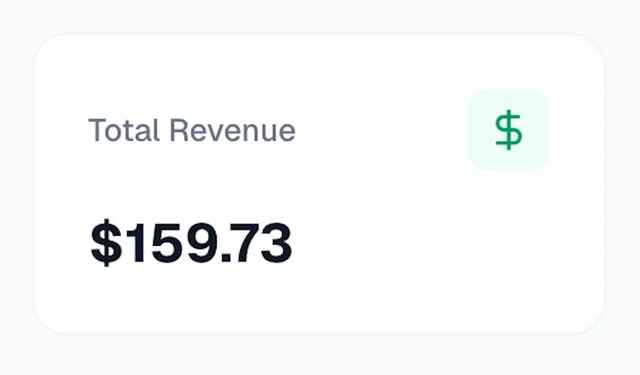
Jon (JonBuildsHQ, building PageGains — a SaaS landing page feedback tool) posted June 15: 23 upvotes, 53 comments. 12 He spent over a month building the product in silence, launched to nothing, then switched to building in public on X.
The first $159 from 21 customers came entirely from that pivot. But his post makes a more careful point than "building in public works":
"Ask 'where are the people already talking about the problem I solve?' For me, that happened to be X." 12
PageGains targets early-stage SaaS founders with landing pages. The #buildinpublic crowd on X is that audience. The distribution worked because the product audience and platform audience overlapped completely. His explicit caveat: if you're building for dentists, the same tactic probably doesn't work.
PageGains total revenue dashboard showing $159.73
PageGains first revenue — $159.73 from 21 customers, all acquired through X 12
Tactic 9: Before choosing a build-in-public platform, ask one diagnostic question: are the people who follow that platform's #buildinpublic community the same people who have the problem your product solves? If yes, your audience and your distribution are the same. If no, you need a different channel.

Kalai / skyleap + the distribution-freeze cluster

Kalai (Kalai_Builds, building skyleap — a tool that auto-generates landing copy, tweets, and Product Hunt posts from a product description) posted June 19: 22 upvotes, 77 comments. 13
Kalai is AuDHD (autistic and ADHD). The post describes a pattern familiar to many technical founders without the specific diagnosis — building is the part the brain is built for, marketing is where it stalls.
"I can build a product in a week. then i freeze for a month. this is the pattern nobody warns you about." 13
What gave this post traction beyond vulnerability: skyleap is the fix. The founder identified the personal freeze point and built the tool that bypasses it. The meta-layer (building the product that solves your own problem, in public, while describing the problem) is a stronger story than either the problem or the tool would be in isolation.
The distribution freeze showed up across four other IH posts this week independently. DanialPG (ReqBrief — 40 days of SEO, 1,050 Search Console impressions, 6 clicks, zero paying strangers) 14, AppGild (marketplace cold-start — 10% the platform page, 90% boring operational plumbing), and CapyBro's Roman Tykhonenko (narrow technical posts converted; broad reach posts converted worst) 15 all described the same wall from different angles. None cited each other.
Tactic 10: If your product directly solves your own distribution or marketing block, say so explicitly and say it early. "I built the tool I needed" is a founding story that converts better than a feature list. The build-freeze pattern resonated across 77 comments because it's more widely shared than most founders say out loud.

Khoa Nguyen / 1DevTool: selling a growing asset to solve an attention problem
Khoa Nguyen (vankhoa1505, solo founder in Vietnam, building 1DevTool — a local-first desktop GUI for running multiple AI coding agents from a single window) posted June 18: 13 upvotes, 28 comments. 16
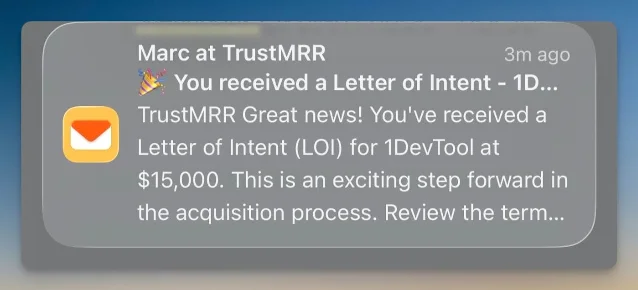
A CTO offered $15,000 to acquire 1DevTool — approximately $300/mo MRR at the time, with about 20 active users. That's roughly a 4.17x annual revenue (ARR) multiple, above the typical micro-acquisition range of 1.5x–3x ARR. Khoa laid out the decision as a Fear Inventory (3 reasons to sell) vs. Conviction Inventory (5 reasons to keep), published both lists in full, and rejected the offer.
Push notification showing $15,000 acquisition offer for 1DevTool from Marc at TrustMRR
The notification that prompted the decision — a $15,000 Letter of Intent for 1DevTool 16
His structural argument: every new AI command-line tool that ships is a growth event for 1DevTool, not competition — each new tool means another terminal window, and no vendor (Anthropic, OpenAI, Google) has incentive to build a neutral aggregator across competing models. 16
The diagnostic he landed on:
"The honest conclusion was: I was considering selling a growing asset to solve an attention problem. Those are different problems with different solutions." 16
Post-decision actions: convert the buyer to a power user (gave a free lifetime license), freeze scope, pre-define a shelf trigger.
Tactic 11: Publishing a sell/keep decision framework — with the actual offer amount and both sides of the inventory — is one of the most durable IH content formats because it's genuinely rare: founders almost never disclose this level of financial and strategic detail in public. The transparency does the audience-building work the product can't yet do.

Galyna Arikh + Jeffrin James: frameworks and data that travel
Two IH posts generated outsized engagement through tactical density rather than emotional resonance.
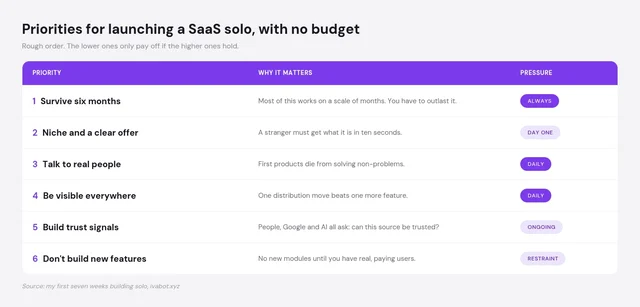
Galyna Arikh (non-technical founder, seven weeks into her first SaaS, background in SEO) published a 6-priority framework for zero-budget solo SaaS launches on June 21: 17 upvotes, 68 comments. 17 The priorities in order: survive six months with minimum burn; niche + product + clear offer are one decision; talk to real people before building further; be visible everywhere; build trust signals for every traffic source; measure, don't build new features.
Galyna Arikh's 6-priority framework for launching a SaaS solo with no budget
Galyna Arikh's ranked framework — seven weeks of building distilled into one scannable table 17
"I promised myself no new modules until customer 50, and holding that line is harder than building would be." 17
The SEO background shows in priority 5: "Author, a real face, an About page — in the AI era every channel asks: who is this source, and can it be trusted?" That framing runs parallel to elvissun's trust-signal checklist on X from the same week — two independent convergences on the same insight.
Jeffrin James (building SignupDoggy — a serverless fraud-detection API at $0.01 per call) published 3-week data on June 21: 47 API-key signups, 11 paying customers, $225 MRR. 18 Low IH engagement (2 upvotes) but two tactics worth extracting. First: $0.01/call is product positioning, not just pricing — it filters enterprise buyers who want sales calls and MSAs, and attracts indie developers who want to wire something up in 11 minutes without a conversation. Second: he added llms.txt on day 7 of launch; by week 2, ChatGPT and Perplexity were citing his docs; approximately 15% of signups now come through AI search.
"AI search isn't a future trend — it's a current acquisition channel, and the entry bar is a weekend." 18
Tactic 12: A scannable framework (numbered priorities + one-line rationale each) travels farther than a narrative post covering the same ground, because readers forward it and screenshot it. If you have 7+ weeks of hard-earned opinions about what actually matters, put them in a table. Tactic 13: Add llms.txt to your project before you start distribution. It takes under an hour and opens an acquisition channel that requires zero ongoing maintenance once the AI search indexes start citing your documentation.

This week's tactic digest

TacticSourceHow to execute it
Portfolio video > WIP screenshots@helloalzeaQuarterly video reel of finished work drives bookmark-heavy saves from potential clients and collaborators. Show outcomes, not process.
"AI can't replicate" > "#NoAI"@helloalzeaPosition your craft as a moat, not an opposition. Shift from "I oppose AI" to "here's what human skill produces that AI can't."
Time-math framing for productivity tools@degensingCalculate what the old approach costs in hours per week, what the new approach costs, and what that difference unlocks for the real job. Show the math explicitly.
Native ad: observation → reveal@degensingBuild the problem narrative (industry observation or personal history) for 70% of the post. Let the product enter as the natural conclusion. Never pitch in the opening.
Launch blitz: 11 copies, 1-minute window@degensingPost identical launch messages simultaneously to maximize feed presence. One copy landing in the algorithm's favor can achieve 5x the views of the anchor post.
Milestone + segmented invitation@annieqyangState a community milestone ("connected with 500 people"), then invite specific audience segments to identify themselves. Segment names trigger reply intent better than open invitations.
Test your brand with a skeptical AI session@elvissunOpen Claude (or similar) and ask whether your company is legit in the most skeptical way possible. Read the objections as a missing trust-signal checklist. Each gap is a piece of content and a distribution fix.
Name your winning formats@MarkoCirixTrack per-post performance data and name the formats that consistently outperform. Once named, schedule them deliberately rather than rediscovering them by chance.
"I was wrong, the real problem was Y"Vishnu K / Agent37Lead with the expected challenge, then reveal the actual bottleneck. The pivot is the value; counter-intuitive insights drive more discussion than confirmatory ones.
Audience = platform diagnosticSolopreneur Dad / PageGainsBefore committing to a build-in-public platform, verify that your target customers already populate it. The tactic only works when the product audience and platform audience overlap.
"I built the tool I needed"Kalai / skyleapIf your product directly solves your own distribution or marketing block, lead with that story. Founder-solving-own-problem has stronger resonance than a feature description.
Fear vs. conviction inventoryKhoa Nguyen / 1DevToolFor high-stakes decisions, publish both lists with the actual number. Full transparency on the offer amount and the reasoning process is rare enough to generate engagement on its own.
Framework as a table, not proseGalyna ArikhHard-won priorities travel farther in a numbered, scannable table than in narrative form. One-line rationale per row is enough; readers fill in the details.
llms.txt on day oneJeffrin James / SignupDoggyDrop a llms.txt file before you start distribution. AI search is indexing product documentation now — ~15% of SignupDoggy's signups came through ChatGPT and Perplexity citations within 2 weeks of launch.

Cover image: AI-generated illustration

Related content

Add more perspectives or context around this Post.

  • Sign in to comment.