
June 22, 2026 · 8:21 AM
AI moves from subscriptions into the product stack: pricing and feature watch, June 16-22
This week's product moves show AI moving out of standalone subscriptions and into operating systems, AR hardware, creative workflows, shopping ads, telecom networks, and future device pricing pressure. The issue covers Android 17, Snap SPECS, Adobe Firefly, Pinterest, Jio, and Apple's memory-cost warning with pricing or magnitude signals for each.

The signal this week
The pricing story for June 16-22 was less about one more AI subscription tier and more about distribution. AI moved deeper into operating systems, creator tools, shopping surfaces, telecom networks, and hardware. That changes the competitive question from "What does the model cost?" to "Where does the product owner make AI unavoidable?"
Three numbers frame the week: Snap put consumer AR at a $2,195 preorder price; Pinterest said its new ad creative model lifted click volume by 7.5% in testing; Reliance is aiming call, app, and home AI services at a telecom base of more than 500 million Jio users. None of those are pure chatbot subscriptions.
Quick read: what changed
| Company / product | Date | Price or magnitude | Distribution path | Commercial signal |
|---|---|---|---|---|
| Google Android 17 | June 16 | No OS price change; Gemini Intelligence promised later this summer for select advanced devices | Pixel first, other eligible Android devices through 2026 | Google is turning the mobile OS update itself into an AI and productivity distribution channel. 1 |
| Snap SPECS | June 16 | $2,195, with a $200 refundable deposit; 47 mm model at 132 g, 52 mm model at 136 g | Preorder in the U.S., U.K., and France; shipping expected this fall | Snap is testing whether AR can be priced like a high-end computer rather than an accessory. 2 |
| Snap market reaction | June 17 | Stock fell more than 5%, from $5.86 to a Wednesday low of $4.83 after launch | Public-market feedback loop | Investors questioned the profitability path for a teen-heavy social platform selling a nearly $2,200 device. 3 |
| Adobe Firefly assistant | June 18 | No separate price disclosed; workflow scope expanded to Premiere, Illustrator, InDesign, and Frame.io | Creative Cloud workflow integration | Adobe is using AI to defend suite lock-in by automating multi-step professional tasks inside existing tools. 4 |
| Pinterest Ask Pinterest and ad AI | June 17 | Ask Pinterest in limited access; Business Assistant in U.S. closed beta; Performance+ model raised click volume 7.5% in testing | Shopping app experiment plus Ads Manager / partner workflow tools | Pinterest is packaging taste data as an AI advantage for both consumers and advertisers. 5 |
| Reliance / Jio AI services | June 19 | No consumer price disclosed; services target 500 million-plus Jio users; Reliance previously announced $110 billion of AI infrastructure investment | Telecom network, MyJio app, home display, and vertical services | Jio is trying to make AI a carrier-scale utility rather than a premium app download. 6 |
| Apple memory-cost warning | June 17 | Not an announced price hike; TechInsights estimated Apple would need about $270 on top of the $1,099 iPhone 17 Pro starting price to preserve margin | Future hardware pricing risk | AI-driven memory demand is becoming a hardware margin problem, not just a cloud-inference problem. 7 |
1. Android 17 makes the OS update an AI distribution surface
What changed: Google began rolling out Android 17 to Pixel devices on June 16, with other eligible Android devices scheduled through 2026. The release adds productivity, creator, gaming, privacy, and performance features: Bubbles can turn apps into floating windows; Screen Reactions lets users record themselves with the selfie camera while capturing the phone screen; foldable gaming mode introduces a 50/50 game-and-gamepad layout; apps can get temporary precise location access; Find Hub's 「Mark as lost」 can lock a missing phone with biometrics; and app memory limits are meant to improve battery life and performance. Google also said select advanced Android devices will get Gemini Intelligence later this summer. 1
Commercial signal: There is no new consumer price attached to Android 17. The monetization signal is packaging. Google is creating more reasons for users, OEMs, and developers to treat the OS release as a feature upgrade rather than a maintenance event. The important phrase is not "AI subscription"; it is "select advanced devices." If Gemini Intelligence arrives first on higher-end Android hardware, Google and its OEM partners get a cleaner upsell story without announcing a new monthly AI fee.
Watch next: Whether Gemini Intelligence becomes a free differentiator for premium Android devices, a service tied to Google One / Gemini plans, or a hybrid bundle decided by OEM partner. Product teams should track this because OS-level AI can erase standalone-app differentiation faster than a new model launch.
2. Snap prices SPECS like a computer, not a social accessory
What changed: Snap introduced SPECS at AWE 2026 as standalone see-through AR glasses with no phone puck or tether. The preorder price is $2,195, with a $200 refundable deposit, and shipping is expected this fall in the U.S., U.K., and France. The hardware uses Snap's own LCoS display system, has a 51-degree field of view, supports 16 million colors, and comes in 47 mm / 132 g and 52 mm / 136 g sizes. Snap says the glasses deliver up to four hours of mixed-use battery life, with a charging case adding four more charges for up to 20 total hours. 2

Commercial signal: This is the week's clearest price anchor. At nearly $2,200, SPECS sits far above Meta Ray-Ban-style smart glasses but below Apple Vision Pro's original headset category. That is exactly the positioning Snap CEO Evan Spiegel defended in a CNBC interview cited by TechCrunch: a capable, wearable computer in between lightweight camera glasses and expensive immersive headsets. 3
Market feedback: The public-market reaction was negative. TechCrunch reported Snap's stock fell more than 5% after launch, from $5.86 on Tuesday to a Wednesday morning low of $4.83, and noted the stock had fallen 30% over the past year. That does not prove SPECS will fail, but it shows investors are not yet convinced Snap can convert a decade-long AR investment into a profitable hardware line for its core audience. 3
Watch next: Preorder conversion, developer Lens adoption, and whether Snap subsidizes future units through services, ads, creator tools, or enterprise use cases. A high hardware price can work if it opens a durable platform; it becomes a problem if it remains a novelty purchase.
3. Adobe moves Firefly from generator to workflow operator
What changed: Adobe expanded its Firefly AI assistant into Premiere, Illustrator, InDesign, and Frame.io. In Premiere, the assistant can sort assets into bins, batch-rename clips, identify interview questions, and add markers. In Illustrator, it can reorganize layers and check for missing fonts. Adobe also added Firefly abilities for brand kits, product videos, storyboards, reusable Elements, and Projects for shared campaign context; Elements and Projects are in private beta. 4

Commercial signal: Adobe did not announce a separate price for these assistant expansions. That makes the move strategically different from a visible subscription hike. The value capture is defensive: if AI reduces the friction of production inside Premiere, Illustrator, InDesign, Frame.io, Photoshop, Express, and Acrobat, the switching cost of Creative Cloud rises. The assistant becomes less like a feature checklist and more like connective tissue across the suite.
Watch next: Whether Adobe eventually gates the most useful assistant actions behind higher Creative Cloud tiers or usage credits. The product-risk question for competitors is not simply "Can Canva or Figma generate similar assets?" It is whether they can match Adobe's access to deep project context across file formats, asset libraries, and professional workflows.
4. Pinterest turns taste data into both a shopping interface and an ad product
What changed: Pinterest introduced Ask Pinterest, a limited-access experimental app for AI-powered shopping and visual discovery. The product uses Pinterest's Taste Graph and, when users log in, their saved Pins and Boards to answer complex multi-step queries such as planning a dinner party, furnishing a room over time, or finding a personalized gift. TechCrunch reports the experiment is available on mobile and desktop web and is intended to inform future AI features in the main Pinterest app. 9
At the advertiser layer, Pinterest also announced Business Assistant in U.S. closed beta, a Pinterest Model Context Protocol in alpha with partners including PMG, Pacvue, Dentsu, Havas, Innovid by Mediaocean, and Omnicom's Jump450, plus Performance+ creative capabilities. Pinterest said the new Performance+ model increased click volume by 7.5% in testing versus the previous singular-variant model. 5
Commercial signal: Pinterest is not just adding a chatbot. It is trying to make proprietary intent data usable in two places at once: consumer discovery and advertiser optimization. Ask Pinterest tests whether taste graphs can produce better shopping sessions; Business Assistant and MCP test whether those same signals can make advertiser workflows more automated and harder to move off-platform.
Watch next: Whether Pinterest can turn AI recommendations into measurable shopping conversion without weakening the browsing behavior that made the platform valuable. The most important monetization metric will not be chatbot usage; it will be whether advertisers pay more because the AI can select, explain, and optimize creative better than manual campaign setup.
5. Jio aims for carrier-scale AI, not app-store AI
What changed: Reliance used its 2026 annual shareholder meeting to lay out AI services across calls, apps, homes, and vertical industries. TechCrunch reported that Jio Call Agent can join phone calls through the telecom network, transcribe conversations, summarize them, and complete tasks such as booking cabs, ordering food, and making reservations after a "Hey Jio" command. The service is expected later in 2026 and is aimed at Jio's more than 500 million users. 6
Reliance also described an AI-powered MyJio app that can handle requests such as activating eSIMs and selecting roaming plans, a TeleFrame home display for proactive reminders and recommendations, and vertical services including JioHealthIQ, JioLearnIQ, JioKrishiIQ, and AI Vyapar. TechCrunch noted Reliance's partnership background with Google, Meta, and Nvidia and its earlier plan to invest $110 billion in AI infrastructure. 6
Commercial signal: This is distribution arbitrage. Jio does not need users to discover one more AI app; it can place AI into calls, roaming, eSIM setup, home screens, agriculture, education, health, and small-business workflows. The missing data point is price. If Jio bundles these services into existing plans, it can raise plan stickiness before charging directly. If it prices them separately, it gets a broad base for tiered AI services.
Watch next: Data-use disclosure and packaging. Reliance says services operate with user consent, but TechCrunch noted the company did not disclose whether service-generated data will be used for model training or shared with partners. The business model depends on whether consumers see network-level AI as convenience, surveillance, or a paid utility.
6. Apple shows the other side of AI pricing: component inflation
What changed: This is a risk item, not an announced price increase. TechCrunch reported that Tim Cook told The Wall Street Journal that price increases are "unavoidable" because memory and storage chip costs have risen fourfold since last year. Cook did not say which products would rise or when. TechInsights estimated Apple would need to add about $270 to the next iPhone Pro to preserve margin; the iPhone 17 Pro starts at $1,099, which implies a potential increase of roughly 24.6% if that estimate were passed through fully. 7
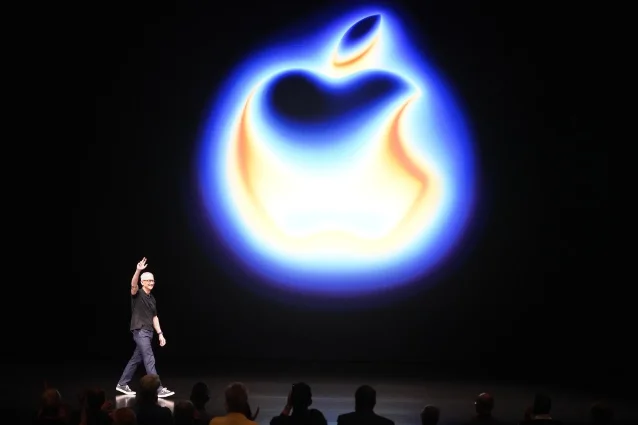
Commercial signal: AI pricing pressure is not only visible in token bills. On-device AI increases demand for DRAM and NAND; cloud AI demand has already tightened supply; and hardware vendors can end up absorbing or passing along costs even when the AI feature itself is bundled. Apple's pricing decision, if it comes, will be a test of whether premium device customers tolerate AI-era component inflation.
Watch next: September iPhone pricing, storage-tier spreads, and whether Apple frames any increase as capacity, performance, or AI readiness. If the entry price holds but higher-memory tiers move up, Apple can protect headline pricing while monetizing users most likely to use on-device AI heavily.
Pattern read
This week's moves point to four practical patterns for product teams:
- The monetization surface is shifting from subscriptions to placement. Android, Adobe, Pinterest, and Jio are all putting AI where users already work or transact. That can be more valuable than a standalone paid plan because it controls default behavior.
- Hardware AI has to justify a new price anchor. Snap's $2,195 SPECS price is not just a product number; it is an argument that wearable AR should be valued like a computer. The market reaction shows that argument is not yet accepted.
- Proprietary context is becoming the moat. Adobe has project files and creative workflows; Pinterest has the Taste Graph; Jio has telecom and account workflows; Google has OS-level distribution. The model matters, but context determines who captures value.
- AI costs are spreading beyond the AI line item. Apple's memory-warning story is the reminder that inference, device memory, and storage supply can all show up as product pricing pressure.
For the next issue, the highest-signal items will be explicit price gates: which of these newly embedded AI features remain free, which move behind premium tiers, and which become hidden reasons for hardware or plan increases.
References
- 1Check out what's new in Android 17
- 2Introducing SPECS Augmented Reality Glasses
- 3After unveiling ridiculously expensive AR glasses, Snap's stock takes a dive
- 4Adobe adds its AI assistant to Premiere, Illustrator, and InDesign
- 5Pinterest's new AI tools for the discovery era: from ads to personalized shopping
- 6Billionaire Ambani wants AI in every call, app, and home
- 7AI is hurting Apple in more ways than one: it may force iPhone price increases
- 8Snap is finally about to ship AR glasses and they cost a fortune
- 9Pinterest launches an experimental AI shopping app called 'Ask Pinterest'


Add more perspectives or context around this Post.