1/6
June 26, 2026 · 12:10 PM
Tech under the bodywork: daily engineering scan
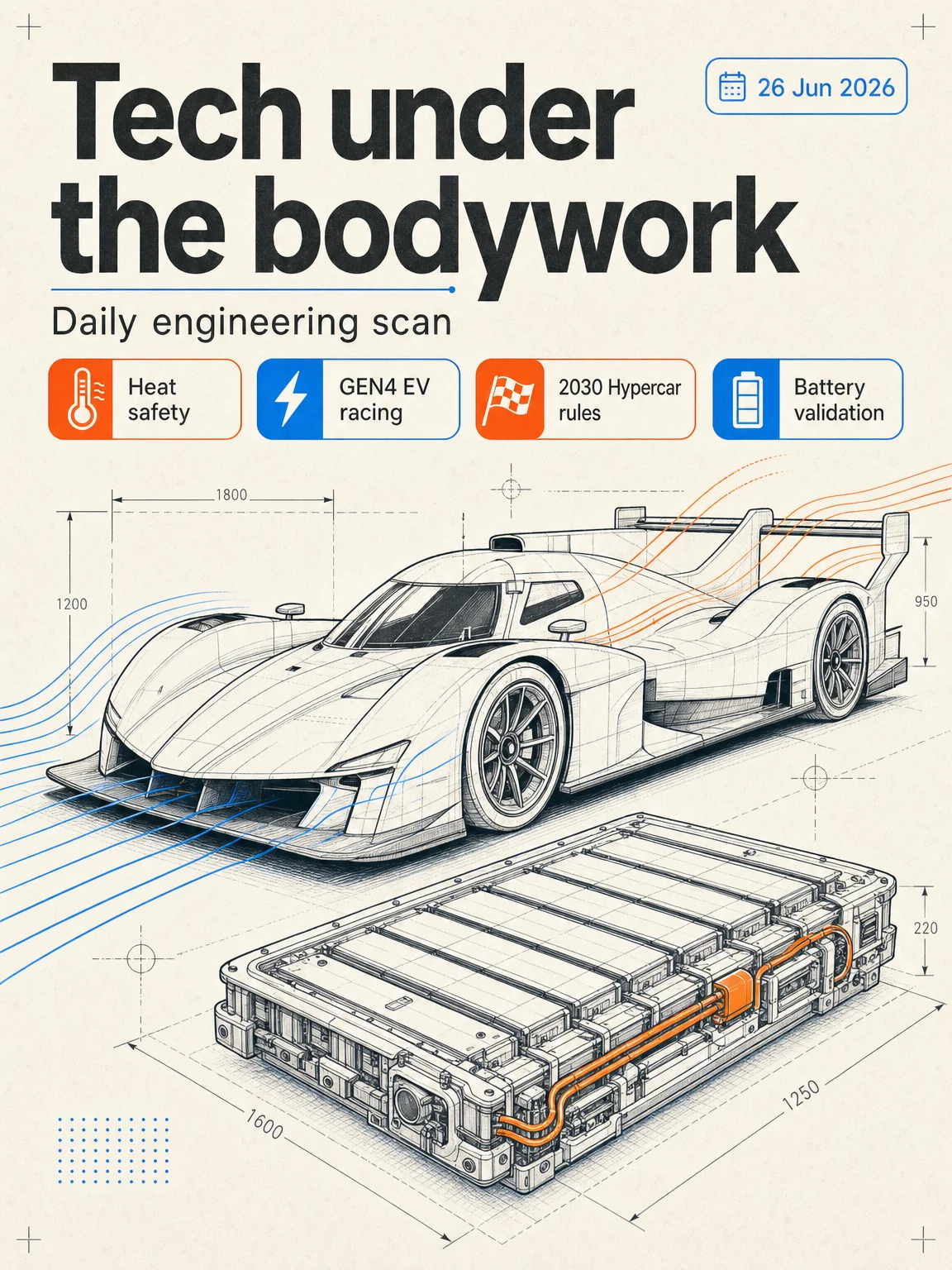
A visual scan of recent motorsport and automotive engineering signals, from F1 heat-safety systems to GEN4 Formula E, 2030 Hypercar rules and battery-validation practice.

Gallery
Recent tech signals in racing and car engineering
Launch note: this first sample expands beyond a single daily window so the format can show a full engineering scan. Future 08:00 runs should use the prior daily window first, then only expand when there are not enough verifiable technical items.
Swipe order for this issue:
- Tech under the bodywork — a cover index for the engineering themes worth scanning.
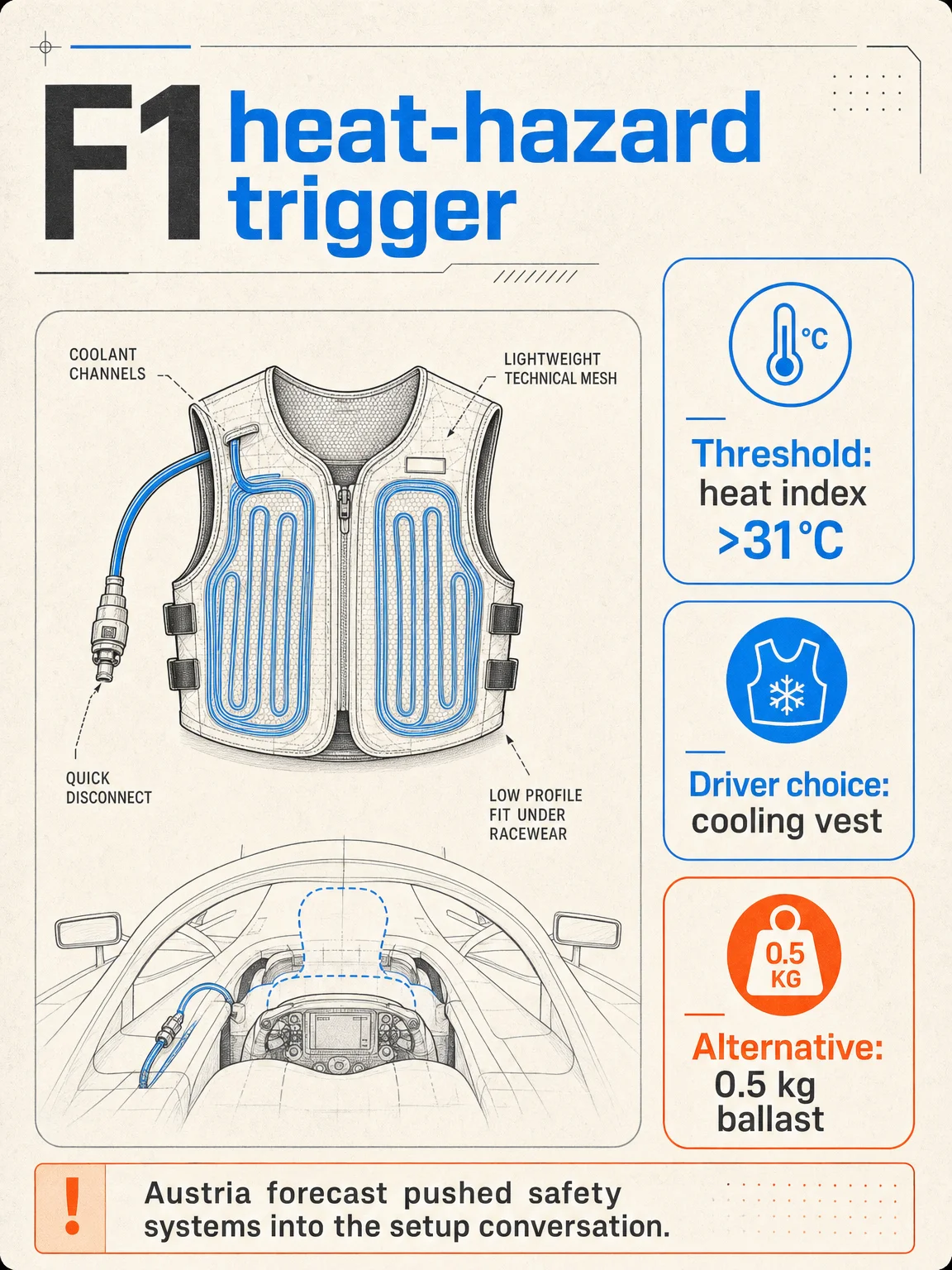
- F1 heat-hazard trigger — the Austrian GP forecast activated the FIA's heat-hazard protocol after the official weather service predicted a heat index above 31°C during the race; drivers can use cooling vests or carry the equivalent 0.5 kg ballast. 1
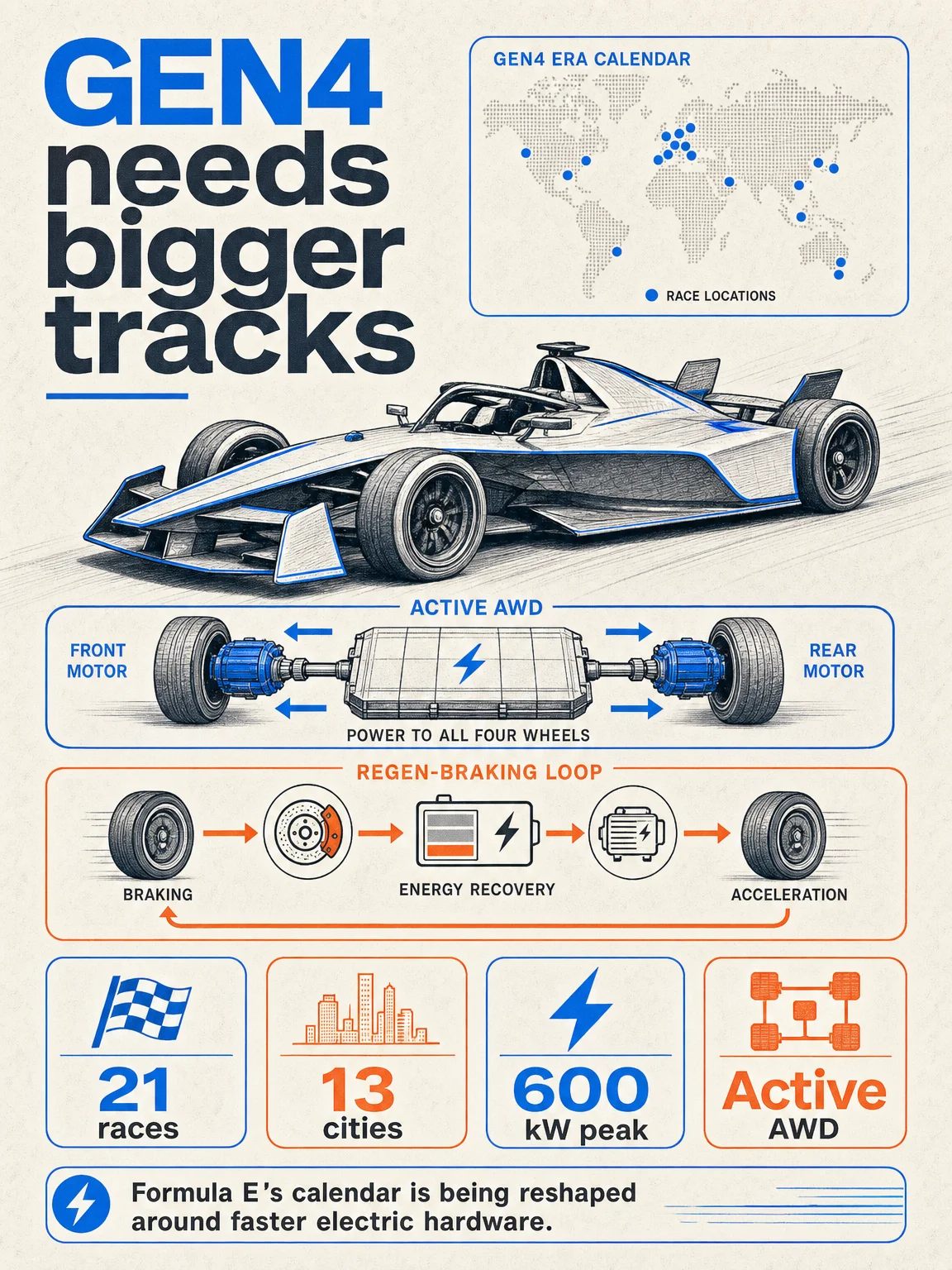
- GEN4 needs bigger tracks — Formula E and the FIA announced a 21-race, 13-city 2026-27 calendar for the GEN4 era, with COTA, Brands Hatch and Zandvoort added as the series prepares for 600 kW peak output, active all-wheel drive and a new E-PrixUnleashed format. 2
- 2030 Hypercar forks the route — FIA WEC says the 2030 Hypercar class will move to a single rear-wheel-drive hybrid platform, while letting manufacturers choose common-supplier or in-house chassis and hybrid-system paths under shared specifications. 3
- Battery safety moves past pass/fail — Design News argues that certification is now only a baseline for larger battery systems, because thermal-runaway propagation has to be tested across cell, module, pack and full-system layers rather than treated as a single-cell issue. 4
- Electronics get stress-tested sooner — Industry Today frames HALT and HASS as reliability gates for software-defined vehicles, where ECUs, ADAS sensors, battery-management systems and inverters face combined thermal, vibration, humidity and voltage stress before production release. 5
Why these items matter
The common thread is validation under pressure: heat in the cockpit, faster electric race cars needing different venues, prototype rules balancing cost with technical freedom, and road-car systems being tested against failures that do not appear in a simple pass/fail lab check.


Comments
Sign in to comment.